 TM
TM
The unit of intelligence is changing
Mainstream language-model interfaces treat a request–response as the unit of intelligence. That frame decides how systems pick models, measure capability, and spend compute.
Agentic systems rewrite the unit. They do not merely lengthen an answer; they carry work through observation, decision, action, failure, and check. The question is no longer whether a given model can answer. It is whether intelligence stays effective while the work itself is evolving.
On a bounded request, the task is visible at the start, and capability can often be approximated by a single answer. On a trajectory, every step rewrites state: a retrieval may dissolve the original uncertainty; a failed action may expose a deeper constraint; a user remark may overturn the plan. What intelligence to call next depends on what has already happened. Demand is not a difficulty score written in advance. It is revealed in execution.
Supply is changing too. Models are no longer a leaderboard. They are a heterogeneous mix of capabilities — data, scale, structure, post-training, tool exposure, domain, and deployment — with conditional differences in reasoning, code, science, retrieval, critique, tool use, latency, reliability, privacy, and cost. The strongest solo answerer is not always the best critic. A smaller model can have higher marginal value when it searches a different region, supplies specialist knowledge, or performs a bounded check. Two frontier models can also be redundant if their errors are correlated.
Routing still helps on bounded requests: characterize the query, pick a model, escalate if needed. It cannot, by itself, govern a trajectory whose demand becomes visible only as the work unfolds. Knowing “this step is hard” does not tell the system whether it now needs another solver, a domain specialist, an external observation, an independent critique, a stronger synthesis — or no further computation at all.
THE SYSTEMS PROBLEMContinuously match partially observable, evolving demand for intelligence to a heterogeneous supply of capability.
We call this the intelligence allocation problem. The decision unit is not who should own the original request. It is the next most valuable computation given the current state. Fusion Lab is building Fusion for that problem.
How Fusion works
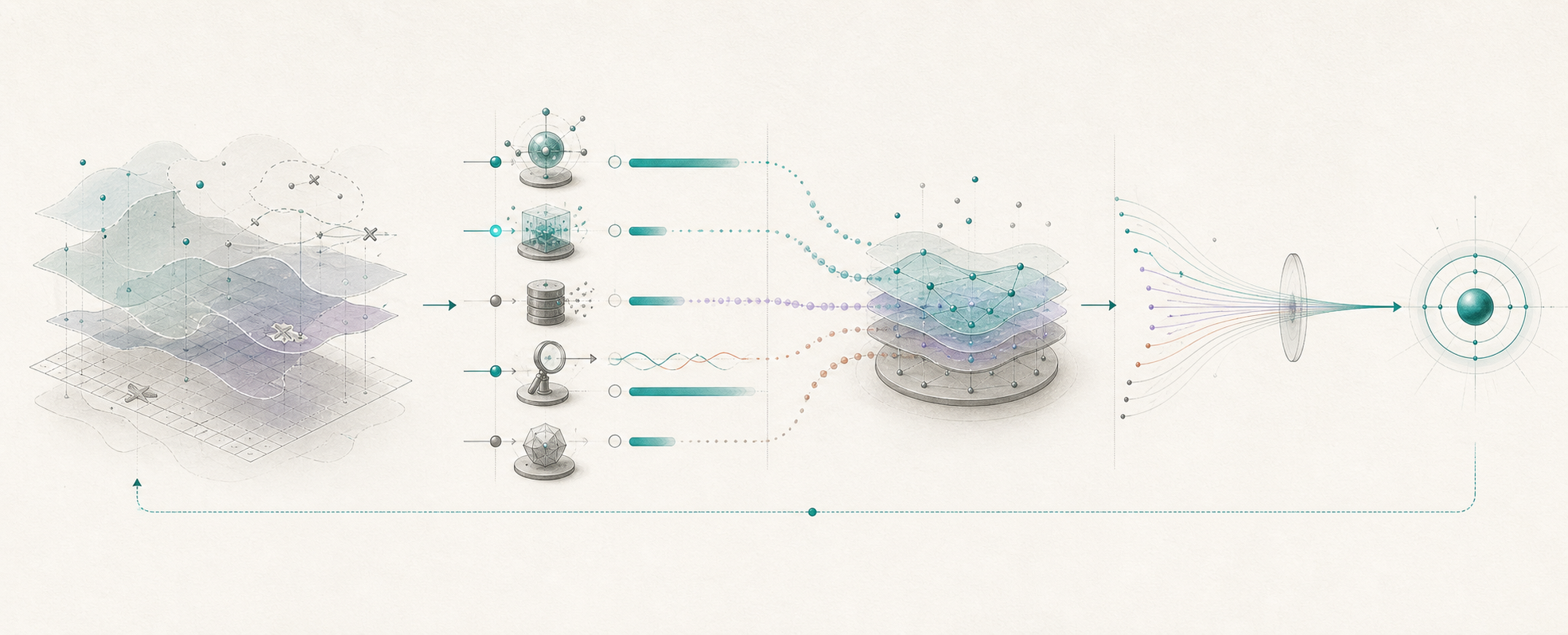
Fusion does not have to predict the whole trajectory before work starts. It treats reasoning as closed-loop evidence acquisition. At each step it asks four questions:
- 01Which uncertainties still affect the decision?
- 02What evidence would actually change the next answer or action?
- 03Among available capabilities, who is best suited to obtain it?
- 04Does the expected value of this computation exceed its cost, latency, and risk?
Observation updates task state, and the questions are asked again. Allocation is not a prelude to execution. It is the process of execution.
Routing assigns a request to a model. Fusion assigns the next evidence-producing computation on an evolving state. It can change the source, the information exposed to that source, the compute allowed — or stop. Routing remains an internal action for requests that are bounded enough. It is no longer the governing abstraction for the system.
01Organize compute around uncertainty, not around models.
02One state, many perspectives, one submission.
The first decides why to compute again. The second decides how plural computations contribute without fracturing the task. Several models may investigate the world; they may not fork world state. Tool calls may be proposals; only the authority path emits external actions. Evidence keeps scope and attribution. Authority stays singular. The user experience does not change: one endpoint. What changes is inside — read state, buy evidence, cross-check, decide whether to continue or submit.
A new dimension of scaling
Fusion treats intelligence allocation as a systems capability that can run through a whole trajectory and improve with experience. It keeps a canonical task state, identifies uncertainties that actually affect decisions, and allocates the capability or observation best suited to resolve them. Outputs enter as attributed evidence. The authority path submits one consistent answer or action. The loop begins again as state updates.
This is not many models in one shell. Composition describes what is in the system. Compounding describes how capability grows. Adding more models is composition. Learning how their conditional strengths interact with real tasks is what makes compounding possible.
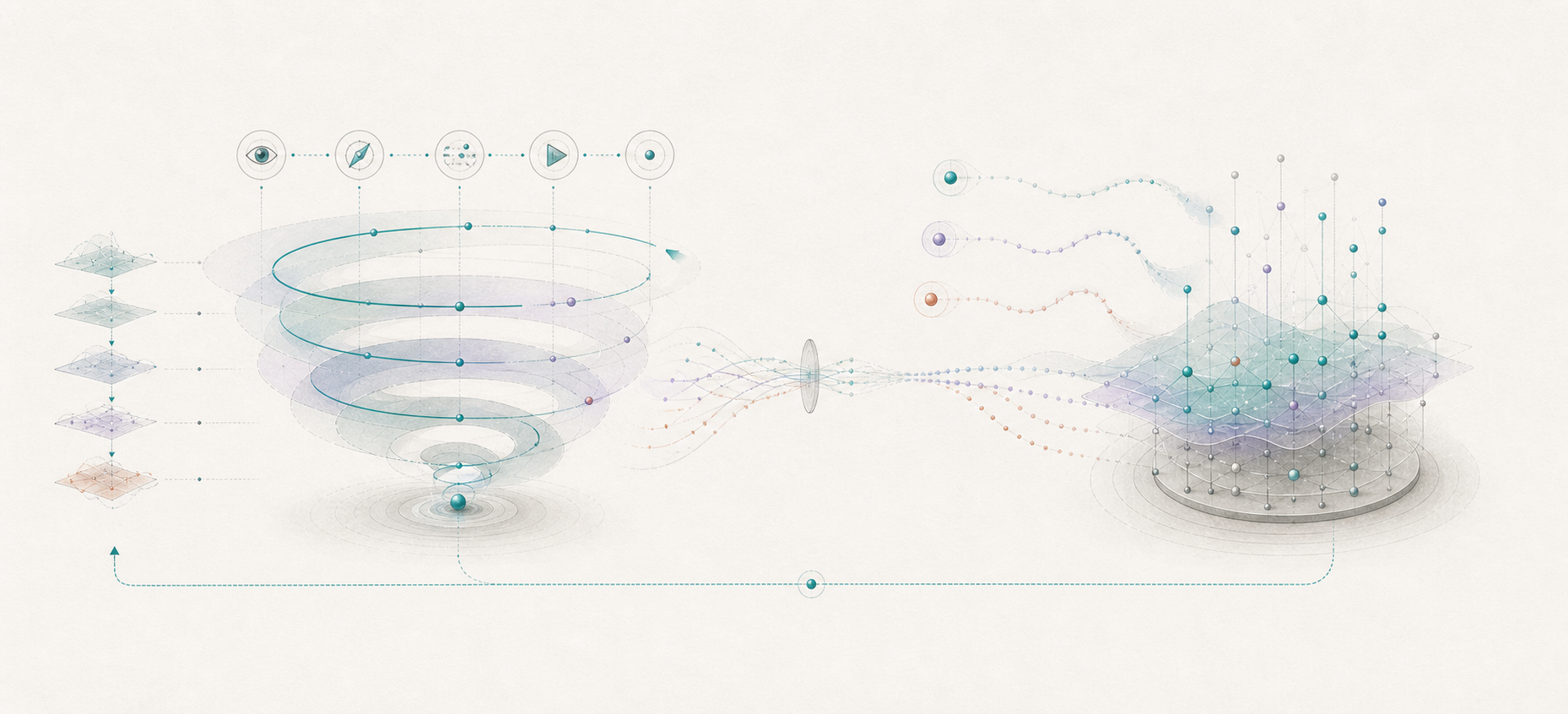
Model progress expands the supply of intelligence that can be drawn on. Allocation progress decides how much of that supply becomes useful system capability. Neither has to wait for the other. Together they can compound. That is a new scaling dimension: system capability can grow faster than simply spending more frontier compute.
This is not a “cheaper AI” thesis. Redundant frontier calls mean the system cannot tell present evidence from missing evidence. Premature use of a weaker source means it cannot tell where stronger judgment is load-bearing. Allocating intelligence must improve both capability and the productivity of compute.
Fusion gets stronger when models get stronger — and again when it learns how to use them.
Beyond stacking compute in proportion
Allocation has to be visible from outside the system. Fusion should not force a choice between frontier capability and deployable efficiency. It should move that frontier.
On bounded problems, the aim is a Pareto improvement on the performance–compute curve: less frontier compute for the same quality, or higher task quality for the same compute. On agentic trajectories, the aim is that the effect survives state change: higher end-to-end completion, fewer inconsistent transitions, lower compute per successful task.
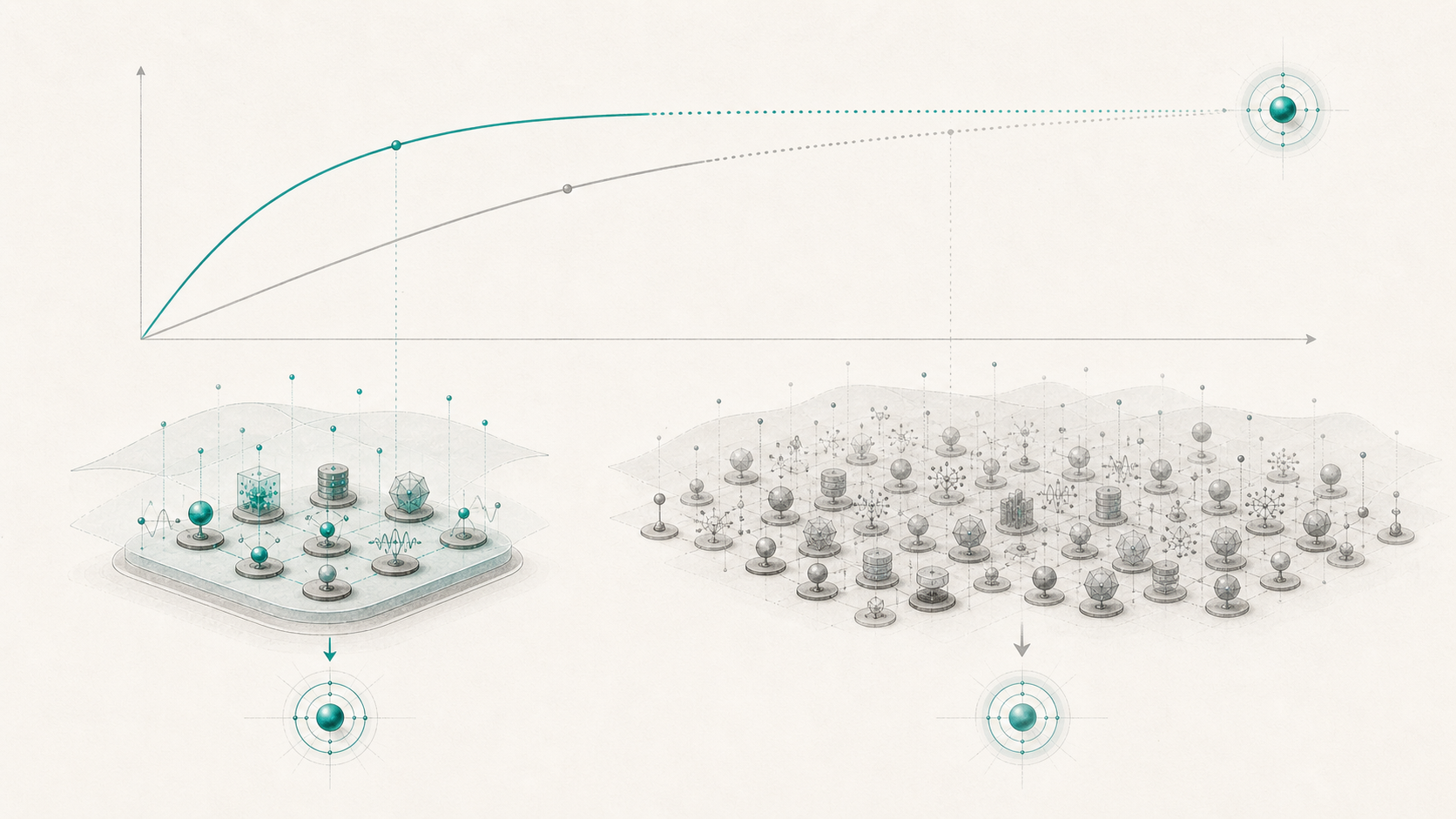
Internal workloads recorded in the whitepaper show Fusion holding high task performance while reducing task cost by about 30–40% relative to calling its authority synthesis model directly. The point is not substituting a weak model for a strong one. It is keeping stronger judgment on load-bearing steps, and dropping the assumption that every intermediate reasoning step must be purchased at the same capability tier.
Full, traceable protocol numbers — model versions, pricing dates, task sets, graders, retries, and all internal usage — ship with the Benchmark page and the whitepaper. Client-visible tokens are not a substitute for orchestration cost.
Asymmetric composition is not automatically better. A cheap source that only contributes misleading or redundant evidence is not efficient. The advantage appears only when the system has capability understanding and task-state awareness, and therefore uses asymmetry selectively. What moves the frontier is that allocation layer — not “there is a smaller model inside.”
AI for Science: when several true facts compete
Hard scientific questions rarely fail for lack of facts. They fail when a true fact is used outside its constraints, frozen at an older definition, or dropped in the middle of a causal chain.
That is the kind of work intelligence allocation is for. In materials, epigenetics, development, and physical chemistry, the hard part is often not missing a formula. It is which piece of knowledge is allowed to decide the answer now. Single models are easily pulled by a fact that is true but not decisive. Fusion is more stable at reading constraints first, then allocating the capability that can close the remaining uncertainty, and submitting once.
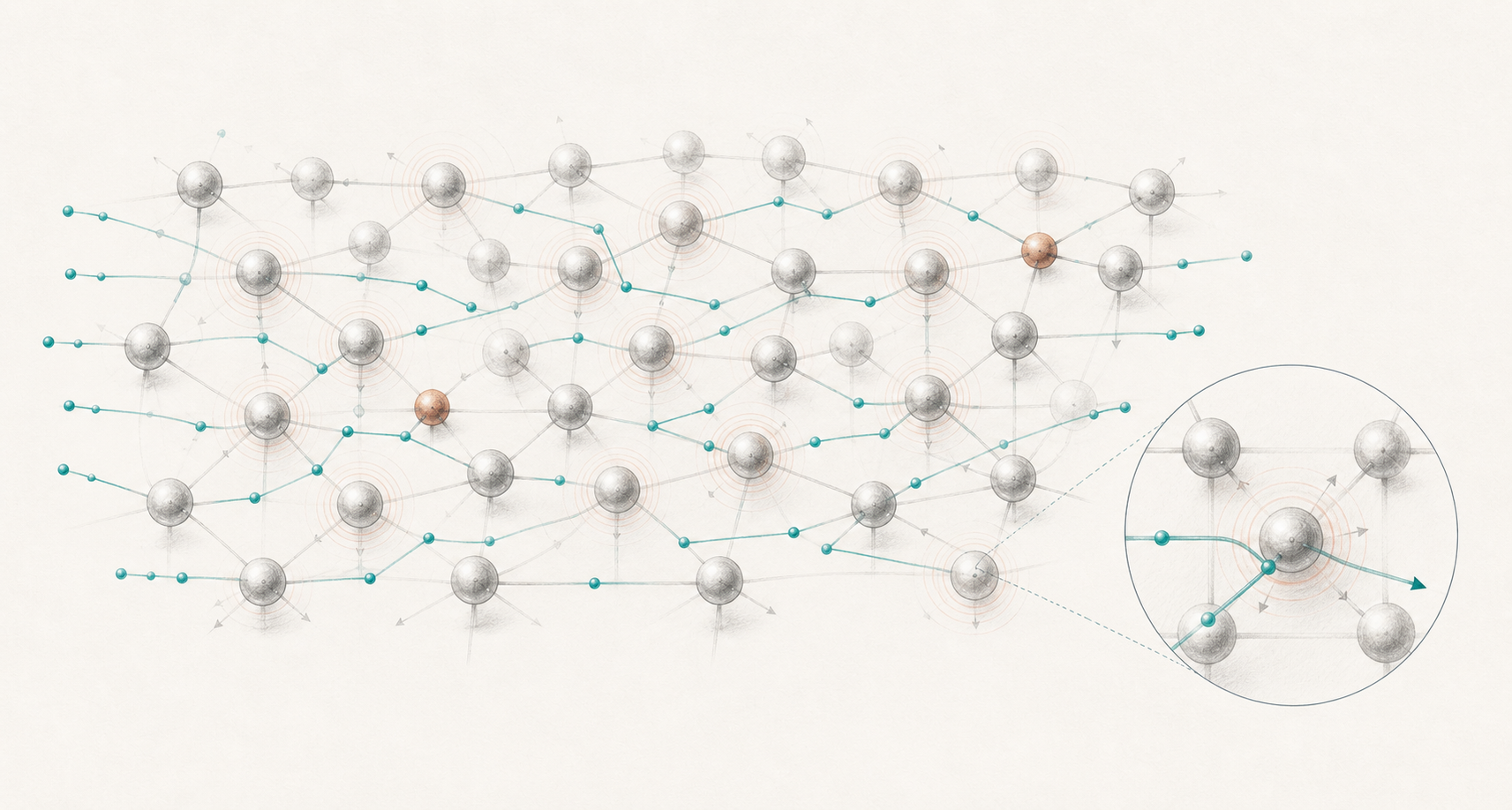
These four cases are representative items with clear distractors. They do not claim Fusion beats every single model on every item. They show where Fusion is stronger at constraint recognition, knowledge coverage, and causal judgment.
Materials science · Constraint recognition
Impurities scatter electrons. That still isn’t the answer.↓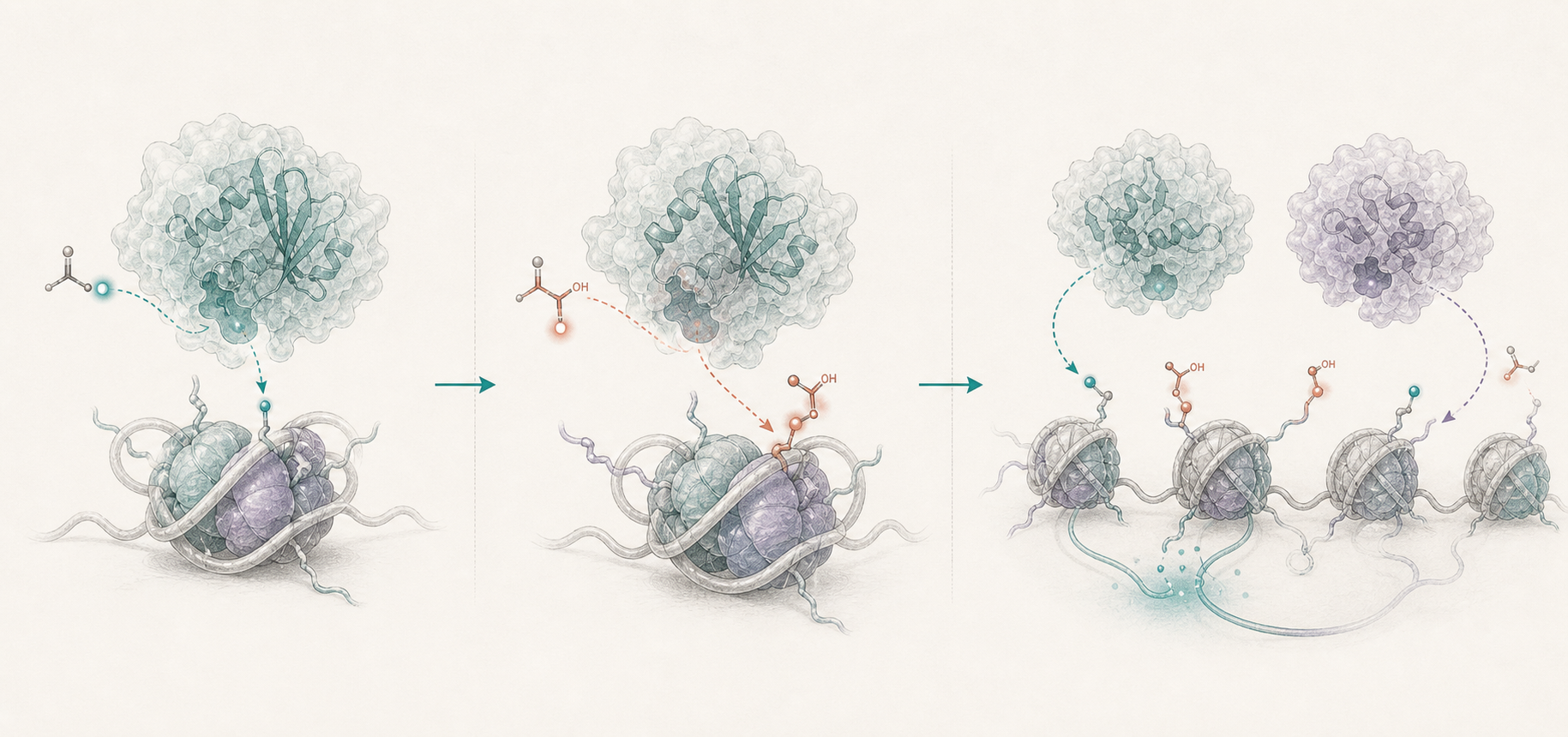
Epigenetics / biomedical research · Knowledge coverage
A protein’s old job can hide its new one.↓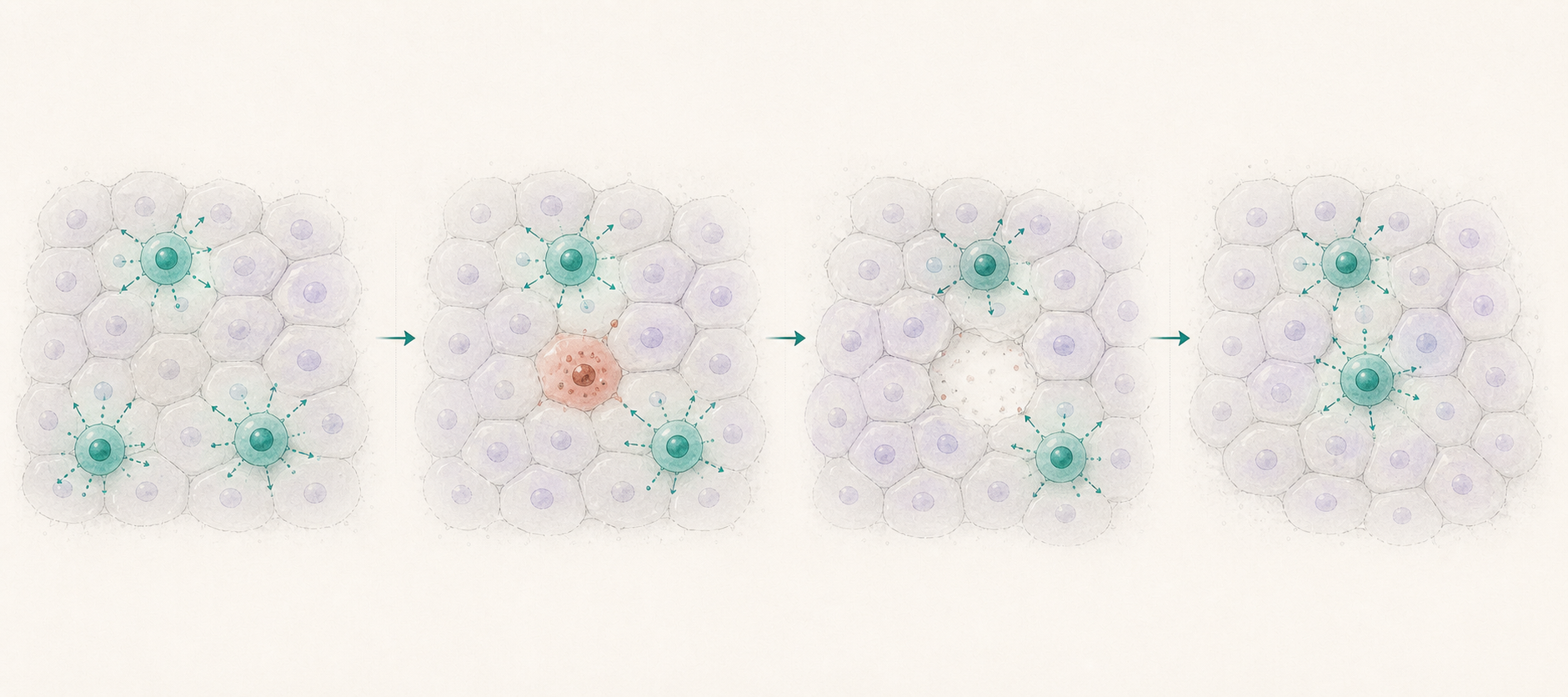
Developmental biology · Causal judgment
If the pioneer cell dies, can its neighbors still change fate?↓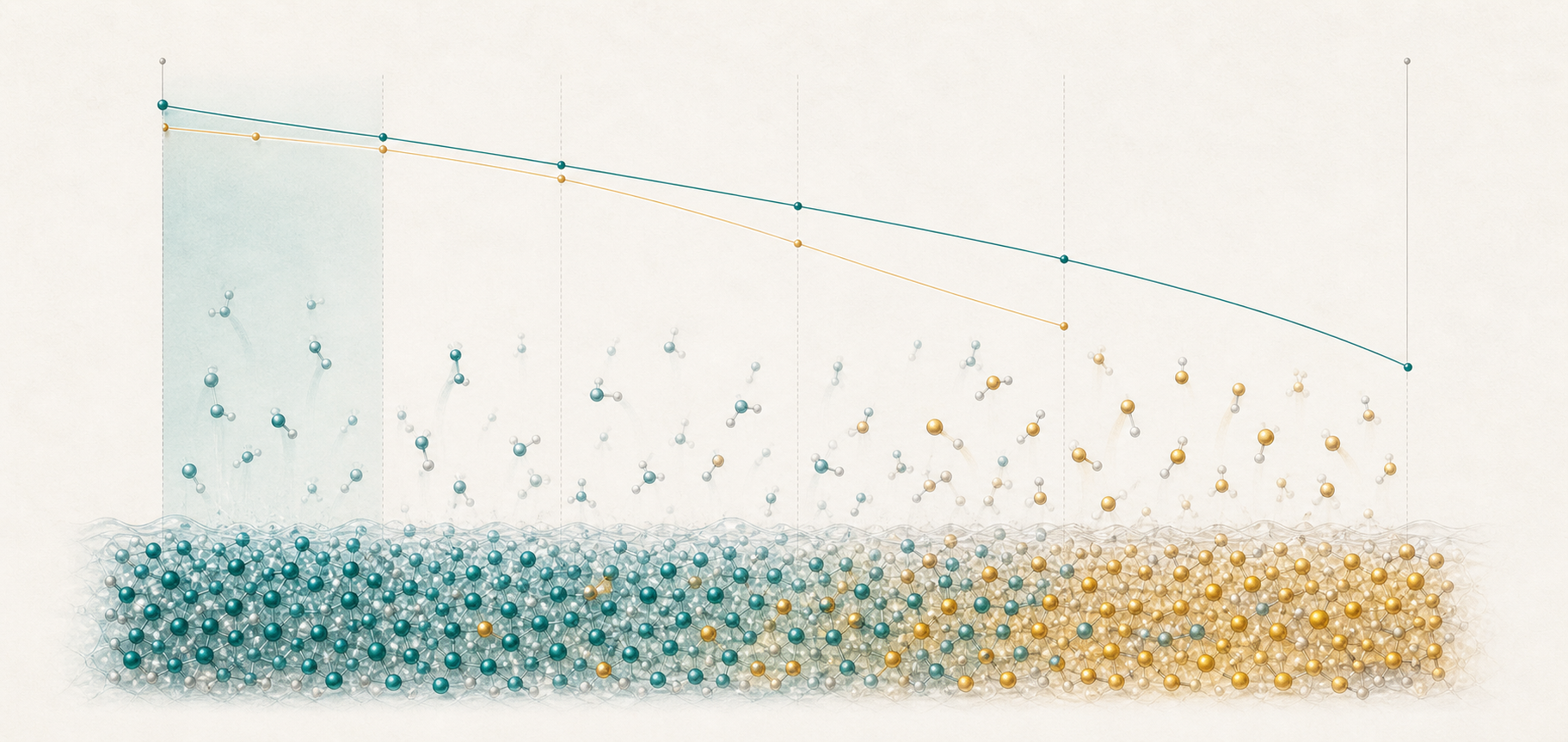
Physical chemistry · Concept boundary
Anyone can recite the law. The test is where it stops.↓Materials science · Constraint recognition
Impurities scatter electrons. That still isn’t the answer.
Metal conductivity is one of the first scientific facts in a textbook. Tighten the question to a pure metal, and to the most significant factor in the usual temperature range, and it stops testing whether you know where resistance comes from. It tests which true knowledge is not allowed into the answer.
Impurity scattering is real. In a pure metal, over ordinary temperatures, the factor that actually moves with conditions — and is therefore most significant — is temperature-driven lattice vibration. Five of eight frontier single models were pulled to “impurity + temperature.” Fusion locked the constraints first, three times out of three.
This is not knowing more materials science. It is reading the constraint before allocating which knowledge may enter.
Epigenetics / biomedical research · Knowledge coverage
A protein’s old job can hide its new one.
Histone lactylation writes a cell’s metabolic state onto chromatin as a chemical note: writer enzymes attach the mark, erasers remove it. HBO1 was long known as an acetyltransferase; later work showed it can also write lactylation.
The single models that missed it had not failed to hear of lactylation. They used the classic identity to veto the new function. Fusion produced the complete writer–eraser frame in 10 of 10 runs, without stopping at the first widely discussed writer, p300.
This is a failure mode research assistants meet daily: the system sounds authoritative, and its evidence froze in the year the protein was first defined.
The claim here is biomedical research Q&A, not clinical advice.
Developmental biology · Causal judgment
If the pioneer cell dies, can its neighbors still change fate?
Lateral inhibition lets a cell that differentiates first tell its neighbors not to become the same thing. The hard part is not recalling the word Notch. It is following the chain after the inhibitory signal vanishes: the differentiated cell dies → inhibition disappears → neighbors are released → fate can still change.
Single models that failed collapsed a dynamic system into a static label and added “neighbors stay fixed after apoptosis.” Fusion completed the chain three times.
High-stakes questions in science and in workflows are often not a single fact. They are whether the downstream still moves if a middle link fails.
Physical chemistry · Concept boundary
Anyone can recite the law. The test is where it stops.
Raoult’s law is not rare knowledge. What separates systems is where it holds strictly and where it is only an approximation. In an ideal solution, every volatile component obeys it across the full composition range. In an ideal dilute solution, the solvent often approximately obeys it as well — a scientifically defensible expansion that still stretches the boundary the question specified.
We do not claim six models “do not understand Raoult’s law.” The contrast is constraint tightness. Fusion stayed inside the fully specified boundary three times.
In enterprise work, one extra true sentence often looks more expert, and quietly carries the conclusion outside the acceptance range. Contracts, experimental conditions, and product specs are the same kind of boundary problem.
The comparison is whether an answer stayed inside the strict boundary specified by the question — not whether another model was simply wrong.
Fusion does not claim to beat every single model on every item. In these representative cases with clear distractors, it is more stable at constraint recognition, knowledge coverage, and causal judgment.
What this lets a system become
Applications today are often rebuilt around one model’s context limit, tool behavior, latency, and failure modes. Fusion offers a more stable intelligence layer above that volatility. New models enter as sources of capability. Existing models change roles as relative strengths shift. Vendor and deployment constraints can be absorbed without rewriting the task. That does not commoditize models. It makes difference usable.
When tasks lengthen, an allocation fixed at the start is rarely optimal throughout. Code runs, users clarify intent, tools return unexpected data, tests falsify the current plan. Fusion’s loop lets the mix of intelligence change with the trajectory: explore broadly, then narrow; spend frontier judgment where consequences are heavy; call verification when a claim is testable; recover after failure without discarding valid state; stop when evidence is enough. Outside, it remains one coherent intelligence. Inside, composition is rewritten as the work is rewritten.
The near-term gain is a better balance of capability and compute. Longer term, the frontier can keep moving for two independent reasons: the underlying model ecology improves, and the allocation layer learns from a growing distribution of tasks and outcomes. A better allocator makes new model capability useful faster, marks where expensive intelligence is actually load-bearing, and reveals which gap is worth the next round of training or specialization. The system is both a consumer of model progress and an instrument for seeing where the next increment is worth paying for.
Leaderboards describe average model performance on predetermined tasks. Fusion needs another picture: a conditional capability map — given this task, this workflow, and the evidence already in hand, how likely is a given model to contribute useful evidence. Visible architecture can be copied modularly. An empirical model of conditional contribution is proprietary and compounds. Learning stays bounded: policies are versioned, evaluable, constrained, and rollback-able. This is not unbounded self-rewriting.
The important shift is not from one model to many models. It is from statically consuming intelligence to adaptively allocating it.
Request access
FUMO Fusion Model is available by invitation. There is no self-serve signup.
To request a trial or read the whitepaper, use Contact on the website.
Bring us your hardest scientific questions and your longest workflows.
FUMO — One fusion, the strengths of many.